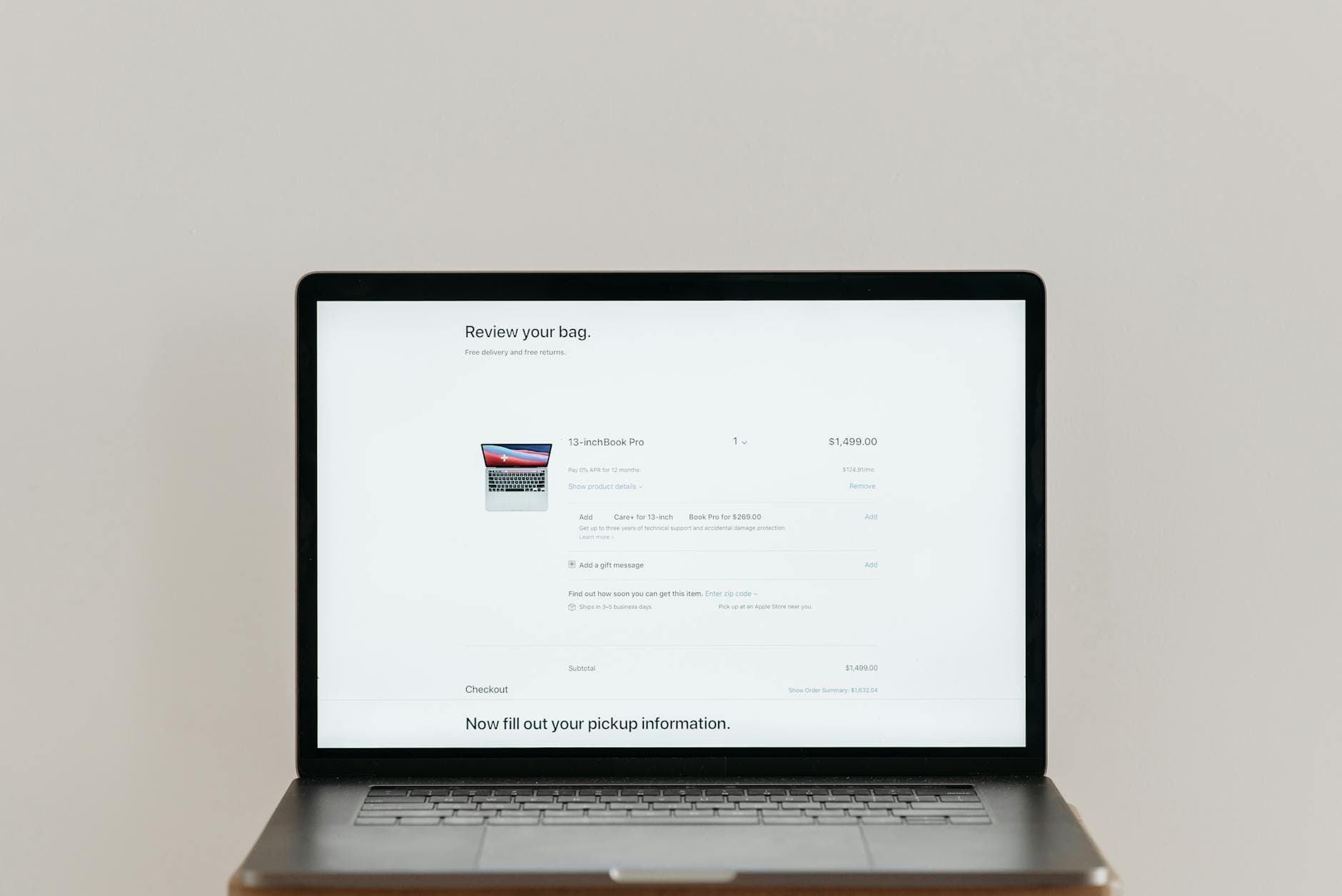

Quick answer: Most product pages lose sales in three places: weak imagery that does not show the product in context, descriptions that list features instead of explaining outcomes, and missing trust signals at the moment of decision. Fix those three in that order before touching anything else.
What Makes a High-Converting Product Page?
A high-converting product page answers three questions quickly: What is it? Why do I want it? Why should I trust buying it here? Pages that bury any of these answers — through poor layout, weak copy, or missing information — lose customers who had genuine intent.
At Limely, the product pages we see underperform most consistently are the ones where the merchant has copied the supplier's spec sheet and called it a description. That approach fails on every level: it is not persuasive, it is not differentiated, and it does not rank.
What Should Every Product Page Include?
| Element | Why it matters |
|---|---|
| Clear product title with key attribute | Helps SEO and sets expectations immediately |
| 4+ images including lifestyle shot | Customers cannot touch the product — images do the work |
| Outcome-led description (not just specs) | Features tell, benefits sell |
| Price with any savings clearly shown | Anchoring increases perceived value |
| Delivery time and cost | Uncertainty here kills conversions |
| Returns policy summary | Reduces purchase anxiety |
| Reviews with star rating visible above the fold | Social proof at the point of decision |
| Clear, prominent add-to-cart button | Sounds obvious — many pages still get this wrong |
| Stock level if low | Genuine scarcity increases urgency |
| Size guide or dimensions if relevant | Reduces returns and pre-sale support tickets |
How Do You Write Product Descriptions That Sell?
Write for the outcome, not the specification. A customer buying a running jacket does not primarily care that it is made from 80gsm recycled polyester — they care that it is light enough to forget they are wearing it and will keep them dry for an hour in drizzle.
The formula that works: one sentence on what it is, two to three sentences on what it does for the buyer, one sentence on who it is for.
Keep descriptions under 150 words unless the product genuinely requires more explanation. Long descriptions that pad out specifications are worse than short ones that are honest and specific.
Avoid generic phrases — "high quality", "premium", "perfect for any occasion". These are zero-signal to both the customer and to search engines. Replace each one with something specific: a material, a measurement, a use case, a real difference.
How Many Product Images Do You Need?
The minimum is four. The sweet spot for most products is six to eight. What those images need to show:
- Clean product shot on white or neutral background — for clarity
- Lifestyle shot in context — for desire
- Detail/texture close-up — for confidence in quality
- Scale reference — next to a hand, a person, or a known object
- Packaging shot — builds brand perception and reduces gifting hesitation
- Back, side or alternate views — reduces uncertainty
Video outperforms static on most product categories. Even a 15-second clip showing the product in use will lift conversion. It does not need to be professionally produced — a clean handheld shot on a decent phone is enough for most stores.
What Trust Signals Should Be on a Product Page?
Trust signals should be visible before the add-to-cart button, not buried in the footer.
The most effective ones:
- Star rating and review count — shown prominently near the product title or price
- Delivery promise — "Order before 2pm for next-day delivery" or equivalent
- Free returns or easy returns policy — one sentence, not a link to a wall of text
- Secure checkout badge — subtle but present
- Real reviews — with photos where possible. Generic five-star text reviews carry very little weight now; customers discount them.
At Limely, adding a three-item trust bar (delivery time / free returns / secure payment) directly above the add-to-cart button has consistently lifted conversion on client stores — typically between 3 and 7% uplift in add-to-cart rate.
How Do You Optimise Product Pages for Search?
Each product page should target one primary keyword phrase — usually "[product type] + [key attribute] + buy" or "[product name] + [brand]".
Checklist:
- Title tag: Include the primary keyword. Keep it under 60 characters.
- H1: Should match or closely mirror the title tag
- Description: Write it as if for a customer, but include the keyword naturally in the first 50 words
- Image alt text: Describe what is in the image and include the product name. Do not keyword-stuff.
- URL slug: Short and descriptive —
/products/blue-wool-scarfnot/products/SKU-00291-BLU - Schema markup: Use Product schema with price, availability and aggregate rating. Shopify applies basic Product schema automatically; check that review data is included.
Product Page Optimisation Checklist
- Product title includes the primary keyword and a key differentiator
- Minimum four images including at least one lifestyle shot
- Description leads with outcome, not specification
- Delivery cost and timeframe are visible without scrolling
- Returns policy is summarised in one sentence on the page
- Star rating and review count visible above the fold
- Add-to-cart button is prominently placed and high-contrast
- Low-stock message is shown when stock is genuinely low
- Mobile layout tested — CTA button is thumb-reachable
- Page loads in under 2.5 seconds on mobile
- Title tag and meta description include the target keyword
- Product schema is present and includes review/rating data
- Image alt text is descriptive and product-specific
- Related or frequently bought together products are shown
The Honest Summary
Product page optimisation is not one big fix — it is removing a series of small reasons not to buy. Every missing image, vague sentence in the description, or absent trust signal is a small percentage of customers who leave. Those percentages add up quickly.
The best-performing product pages we work on at Limely are not the most elaborate ones. They are the ones that give the customer exactly what they need to feel confident, without making them search for it.